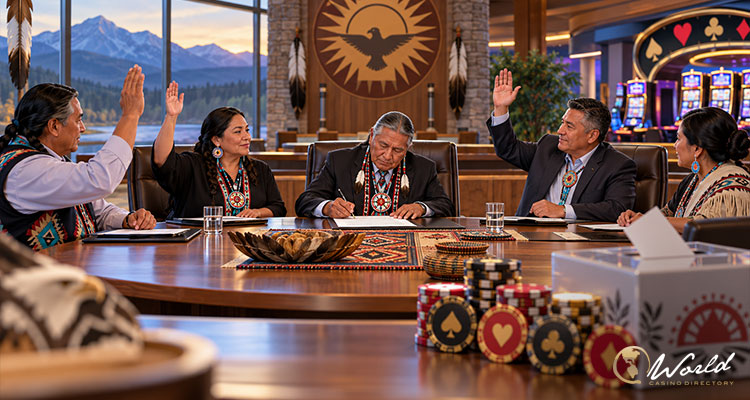
The Lumbee Tribal Council has approved a gaming ordinance in a 14-2 vote, advancing the tribe’s plans to establish a regulatory framework for gaming on tribal lands and sending the measure toward a public referendum.
The ordinance, identified as CLLO-2026-1015-04, passed during a special called meeting following the council’s October business meeting. Tribal Chairman John Lowery must certify the measure within 10 days because it affects fundamental rights. Once certified, the ordinance will enter the referendum process, allowing tribal citizens to vote on whether to rescind it.
Tribal Attorney Joshua Malcolm said the referendum could take place on December 10 or December 15. Under the tribal constitution, the ordinance will take effect unless voters reject it, with at least 30% participation among eligible voters required for a rescission to be valid.
The decision represents another stage in a debate that has divided tribal members over the future of gaming. It could also help advance a proposed resort development in Robeson County, North Carolina, although casino-style gambling would still require additional authorization from the state.
Referendum Follows Earlier Rejection of Gaming Amendment
Councilman Larry Soles introduced the motion to approve the ordinance, with Councilman Carrington Locklear seconding it. Councilmen Harold Smith and Graylen Mitchell opposed the measure, while five council members were absent, according to The Robesonian.
The vote follows a June 23 referendum in which approximately 62% of tribal members rejected a proposed constitutional amendment that would have authorized gaming. Two days later, the Tribal Council instructed Malcolm to examine alternative legal routes for establishing a gaming framework.
That process led to the ordinance approved this month. The measure underwent discussions in the council’s Constitution & Ordinance Committee before advancing to four discretionary public hearings, where tribal members could provide feedback. Council members subsequently considered those comments during special meetings on October 8 and October 15.
The ordinance also underwent revisions during the approval meeting. Soles’ motion was amended by Tribal Council Speaker Alex Baker to attach comments submitted during public hearings, along with written feedback, as an addendum for the record. Baker defended the council’s role in moving the proposal forward and emphasized that the final decision now rests with tribal voters.
“The Tribal Council has done its duty by carefully considering this ordinance, listening to our citizens, and making the decisions necessary to move the process forward,” said Baker. “Now, this question belongs to the Lumbee People.”
The gaming referendum would be the second time tribal members have voted directly on the issue. The tribe also has a regular election scheduled for November 17 and a separate referendum concerning its clean water ordinance on December 3.
Ordinance Establishes Separate Regulatory and Operating Bodies
A central feature of the measure is the creation of two distinct bodies: the Lumbee Gaming Commission (LGC), which would regulate the enterprise, and the Lumbee Gaming Authority (LGA), which would operate it.
The ordinance’s first part sets out the commission’s responsibilities and procedures. The second part, added after public hearings, establishes rules for the operating authority in response to requests from tribal members for greater oversight of those running the business. Both bodies would have five-member boards, with appointments shared between the Tribal Council and the chairman.
The LGC would have three commissioners appointed by the council and two nominated by the chairman before receiving council approval. Its members would serve three-year terms, and the commission would select its own chair, vice chair, treasurer and secretary. Initially, at least two commissioners must be tribal members; by the third year, that minimum would increase to three.
The LGA would have two directors appointed by the council and three nominated by the chairman and appointed by the council. Its chair would be appointed by the council, and directors would serve four-year terms. Three of the five directors must belong to the Lumbee Tribe.
Casino Development Would Require Further Authorization
The ordinance could support the Lumbee Tribe’s longer-term plans for a casino resort along Interstate 95 in Robeson County. The proposed development includes two hotels, a casino, a museum and heritage center, a convention and entertainment center, condominiums and a golf course. Renderings of the proposed casino were released earlier.
Under the approved measure, the tribe could establish Class III gaming, commonly described as casino-style gambling, on its lands if the necessary tribal and state authorizations are secured through a compact. The council’s vote therefore establishes a potential legal and regulatory foundation, while further approval remains necessary before the proposed casino could proceed.
Council members expressed different views about the timing of the next vote. Smith, despite supporting gaming in principle, opposed the ordinance because he believed a mid-December referendum would leave too little time for tribal members to consider the measure before Christmas. He also questioned whether the ordinance was ready for approval while revisions continued during the meeting.
Councilman Eric Chavis, who opposed the earlier gaming amendment in April but supported the ordinance, said the continuing revisions reflected suggestions from council members. Councilwoman Rubalena Locklear also backed approval, arguing that the tribe should move forward so members could benefit from gaming as soon as possible.
The referendum will determine whether the ordinance survives the next stage of the process. If voters do not rescind it under the constitution’s participation requirements, the measure will take effect, providing a framework for gaming regulation and operations while further authorization remains necessary for the proposed casino development.